
People. Passion. Planet.
The Center for Sustainable Communities nurtures social, environmental, and economic sustainability on our campus and in our community. As we work together to advance social justice and sustainability, we create opportunities for innovation, leadership, and change.
Carbon Neutrality. Community Resiliency.
Reaching across disciplines to help Saint Joseph’s College grow sustainably and steward our resources responsibly. Guided by the Mercy Critical Concerns, the Sustaining the Promise Strategic Plan, and the Mission and Core Values of the College, we work collectively to:
Climate Action and Sustainability Plan

Used with permission. ©2018 TPR Education IP Holdings, LLC. The Princeton Review is not affiliated with Princeton University.
In 2015, the College adopted a Climate Action and Sustainability Plan establishing benchmarks, developing goals, and monitoring progress toward carbon neutrality on campus.
In 2022, the College earned STARS Gold rating after earning Silver in 2017 from the Association for the Advancement of Sustainability in Higher Education (AASHE) in recognition of its campus-wide sustainability achievements. This program is the most widely recognized in the world for reporting comprehensive information related to a college’s sustainability performance.
In 2018 and again in 2023, Princeton Review recognized the College for its environmental responsibility and features Saint Joseph’s College in the 2023 edition of its book, The Princeton Review’s Guide to 399 Green Colleges.
The Center's Leadership


Do you have a sustainability project idea or solution that you or a team would like to implement?
→ Submit a project idea to the Center for Sustainable Communities by emailing Nancy Kristiansen, Planning & Administration Coordinator.
We’re a Certified Bee Campus USA® Affiliate
On June 11, 2019, Saint Joseph's College earned a Certificate of Designation from Bee Campus USA® in recognition of its adoption of rigorous commitments to raise awareness and enhance habitat for pollinators.
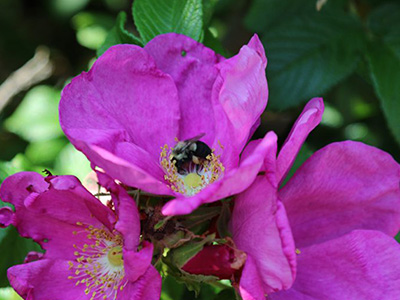 “Pollinators are critical to growing the fruits and vegetables we eat every day, so protecting pollinators and their habitat is vital to food security.”
— Professor Greg Teegarden